

The World Health Organization (WHO) has released the "World Malaria Report 2025," highlighting that resistance to antimalarial drugs is one of the greatest challenges
Recently, the World Health Organization released the "World Malaria Report 2025". The report indicates that the global malaria prevention and control situation in 2024 is a mixed picture.
On the one hand, the anti-malaria tools recommended by the World Health Organization (WHO) are being integrated into national health systems. Since the WHO approved the world's first malaria vaccine in 2021, 24 countries have incorporated the malaria vaccine into their routine immunization programs. The application of seasonal malaria chemoprophylaxis is also expanding, and it has been implemented in 20 countries. Meanwhile, relevant malaria prevention and control measures have yielded significant results. By mid-2025, a total of 47 countries and one region, including China, had been certified as malaria-free.
On the other hand, compared to 2023, the incidence rate and mortality rate of malaria increased globally in 2024. In 2024, there were approximately 282 million malaria cases worldwide, an increase of about 9 million cases compared to 2023; there were approximately 610,000 malaria deaths globally in 2024, an increase of 12,000 cases compared to 2023.
"New malaria prevention tools bring new hope, but malaria prevention and control still face significant challenges," said Tedros Adhanom Ghebreyesus, Director-General of the World Health Organization.
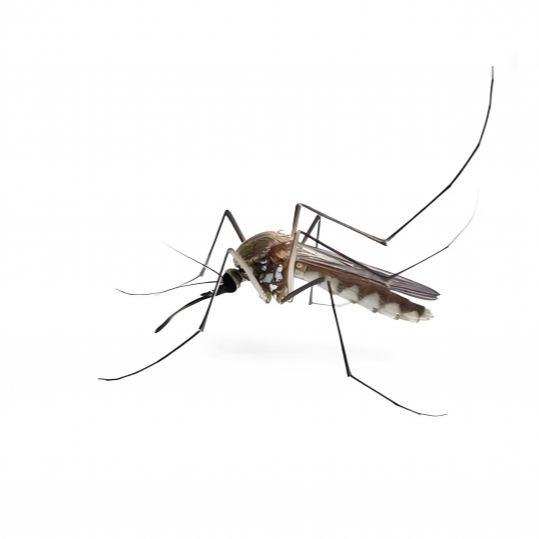
94% of malaria cases globally occur in Africa
According to the "Report", of the 282 million malaria cases globally in 2024, the majority still occurred in the African Region. In 2024, a total of 265 million malaria cases were reported in this region, accounting for approximately 94% of the global total.
The "Report" points out that the increase in malaria cases in Africa in 2024 is due to various reasons. For instance, some countries experienced intensified conflicts or extreme weather events, which disrupted the implementation of health services and interventions.
In 2021, China was recognized as a malaria-free country. The "Report" shows that from 2015 to 2024, the incidence rate of malaria in most countries in the Greater Mekong Subregion also exhibited a significant downward trend: Cambodia decreased by 99.5%, Laos by 99.1%, and Vietnam by 97.4%. Through the World Health Organization's Mekong Malaria Elimination Project, Cambodia, Laos, Myanmar, and other countries in the Greater Mekong Subregion are expected to achieve the goal of malaria elimination by 2030.
The global elimination of malaria faces complex challenges
The "Report" points out that, thanks to the implementation of malaria prevention and control measures, as well as the overall improvement of health systems and infrastructure, over 170 million malaria cases and 1 million malaria deaths were averted globally in 2024. From 2000 to 2024, a total of 2.3 billion malaria cases and 14 million malaria deaths were averted worldwide. Among them, the majority of averted cases and deaths occurred in Africa, followed by Southeast Asia.
However, the "Report" emphasizes that the global process of malaria elimination still faces complex challenges. Firstly, the phenomenon of pfhrp2 gene deletion in malaria parasites remains widespread, which seriously undermines the reliability of rapid diagnostic reagents. Secondly, resistance to pyrethroid insecticides has been confirmed in 48 countries, leading to a decline in the effectiveness of insecticide-treated mosquito nets. Thirdly, Anopheles stephensi mosquitoes resistant to multiple commonly used insecticides have invaded nine countries in Africa, posing new prevention and control challenges in densely populated urban areas.
In addition, the Report points out that extreme weather events have also exacerbated the malaria epidemic. Changes in temperature and rainfall are altering the mosquito's breeding environment, thereby affecting the transmission mode of malaria. Conflicts and instability in affected areas have led to a complete disruption of medical services, limiting people's access to medical care and delaying diagnosis and treatment.
Inadequate global funding remains a bottleneck in prevention and control efforts, limiting the coverage of malaria interventions. According to the "Report," global malaria funding in 2024 amounted to US$3.9 billion, which is less than half of the 2025 funding target set by the "Global Technical Strategy for Malaria 2016-2030." Additionally, a survey conducted by the World Health Organization from March to April 2025 revealed that a decline in related assistance has led to severe shortages of medicines and hygiene products in malaria prevention and control in one-third of countries. Among these, delays in the delivery of relevant supplies pose a serious threat to the timely and effective implementation of measures such as seasonal malaria chemoprevention.
Resistance to antimalarial drugs has become one of the greatest challenges
The Report emphasizes that resistance to antimalarial drugs is one of the greatest challenges impeding the achievement of malaria elimination goals.
Experts from the Chinese Center for Disease Control and Prevention (CDC) explained that for over half a century, resistance to antimalarial drugs has repeatedly hindered the global malaria prevention and control efforts. Chloroquine, widely used in the late 1940s, significantly reduced malaria incidence and mortality rates, but also gave rise to resistance. In the 1970s, resistance emerged in Africa and rapidly spread, reversing most of the previously achieved antimalarial gains. As the efficacy of chloroquine declined, sulfadoxine-pyrimethamine was introduced as a replacement drug, but resistance quickly emerged. By the early 1980s, its efficacy had been severely compromised, especially in Southeast Asia. Similar situations later undermined the effectiveness of mefloquine.
Relevant experts have indicated that, in light of the increasingly clear understanding of the limitations of monotherapy for malaria treatment, the World Health Organization (WHO) has been recommending the use of artemisinin combination therapies (ACTs) in drug-resistant areas since 2000, and extended this recommendation to the global level in 2006. ACTs combine a rapidly acting artemisinin derivative with a longer-acting adjuvant drug, thereby shortening the treatment duration to just 3 days. Over the past decade, ACTs have fundamentally changed the way malaria cases are managed, significantly reducing the global burden of malaria.
Due to the rapid elimination of parasites by artemisinin compounds, it was once believed that the likelihood of developing resistance to them was low. However, in the early 21st century, reports from the Cambodia-Thailand border indicated that patients treated with artemisinin experienced delayed parasite clearance, raising concerns about the re-emergence of resistance.
Despite numerous challenges, the Report highlights that 2024 has been a remarkable year in the prevention, control, and elimination of malaria. New malaria prevention and control tools, such as insecticide-treated nets (ITNs) with dual insecticides and malaria vaccines, have been integrated into a wide range of health systems and adapted according to local conditions.
According to the "Goalkeepers 2025 Report" released by the Gates Foundation on December 4th, increasing investment in developing new-generation innovative tools is expected to completely eliminate diseases that pose the deadliest threats to children, such as malaria and pneumonia. The model of the "Goalkeepers 2025 Report" predicts that continued investment in innovation in these areas could save millions of children's lives by 2045. Among them, the new malaria prevention and treatment tools alone could save an additional 5.7 million children's lives.
In addition, the Report points out that firm political support and active community participation are equally indispensable for promoting malaria prevention and elimination efforts. The Report calls on all sectors globally to take decisive action, strengthen cooperation, continuously advance the process of malaria elimination, and jointly create a malaria-free future.
Short review
The "World Malaria Report 2025" paints a complex picture of global malaria control efforts: the joy of 47 countries and one region being malaria-free stands in stark contrast to the heavy toll of 282 million cases and 610,000 deaths. This bittersweet report not only showcases the effectiveness of prevention and control in some countries and regions, but also highlights the remaining challenges that global malaria control must urgently address.
From malaria-stricken areas to achieving malaria-free certification, the prevention and control journey of countries like China has provided valuable insights for the world. This achievement, which has been made over decades, embodies the governance wisdom of "scientific precision + sustained effort". For example, China's "1-3-7" surveillance response model has been incorporated into the World Health Organization's guidelines, and the combination of community mobilization and stratified vector control strategies has formed a replicable systematic prevention and control plan. At the same time, the robust post-elimination monitoring systems and border control measures in countries like China also provide important references for the world to consolidate the achievements made after malaria elimination.
Drug resistance is a core challenge highlighted in the Report, and technological innovation serves as a crucial support to address this issue. Artemisinin-based combination therapies have been established as the global standard for anti-malarial treatment, with billions of doses distributed in high-incidence areas such as Africa. In sub-Saharan Africa alone, approximately 240 million people have benefited from these treatments. The "Quinaxol Tablets," a novel anti-malarial drug developed and approved by Chinese enterprises, holds promise in providing a new approach to tackle the issue of multi-drug resistance.
It should be recognized that global collaboration plays an irreplaceable role in the anti-malaria process. From assisting in the construction of public health infrastructure to training professional talents, diversified international cooperation is transforming successful experiences into inclusive global public goods, providing tangible support for malaria-prone regions. Of course, global anti-malaria efforts still face multiple challenges such as funding gaps and the spread of drug resistance. Successful experiences from various countries show that firm political commitment, scientific prevention and control strategies, continuous innovation investment, and extensive community participation are core elements for successful anti-malaria efforts. As new drugs gradually enter clinical trials and successful models are implemented in more regions, the light of hope for a malaria-free world becomes brighter. Only by drawing on the successful experiences of various countries and pooling global efforts can we turn the vision of a "malaria-free world" into reality.












Please first Loginlater ~